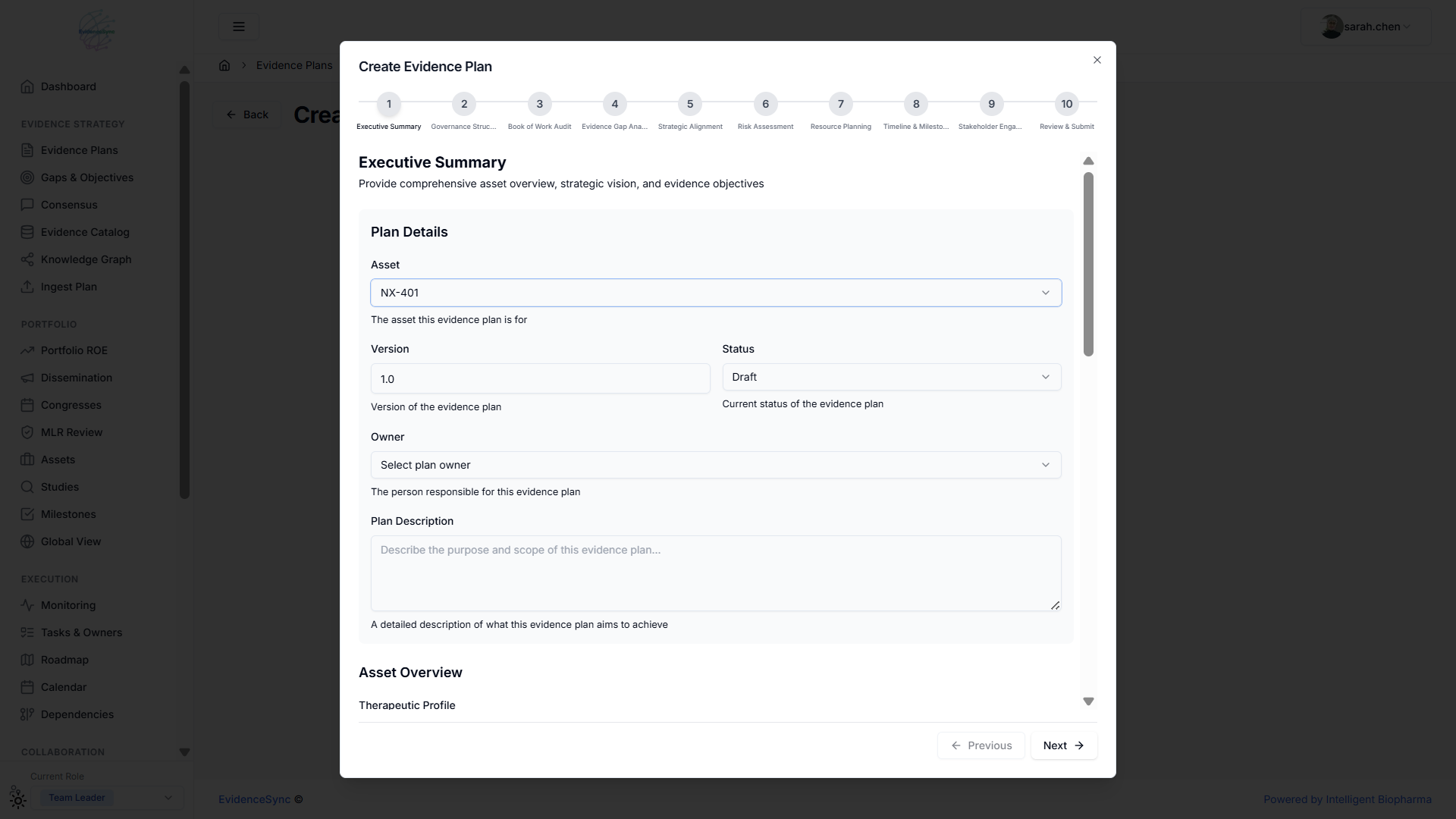
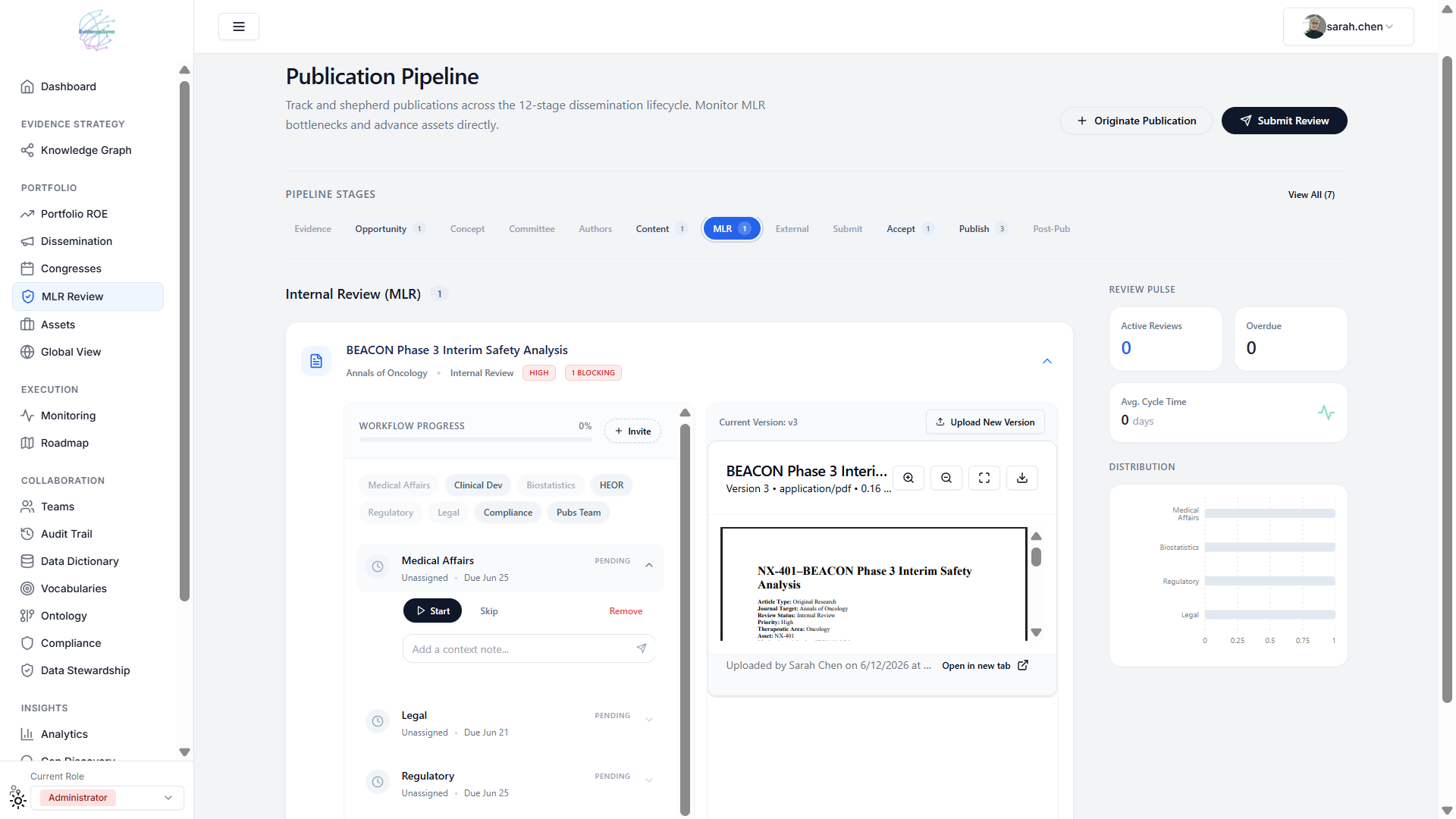
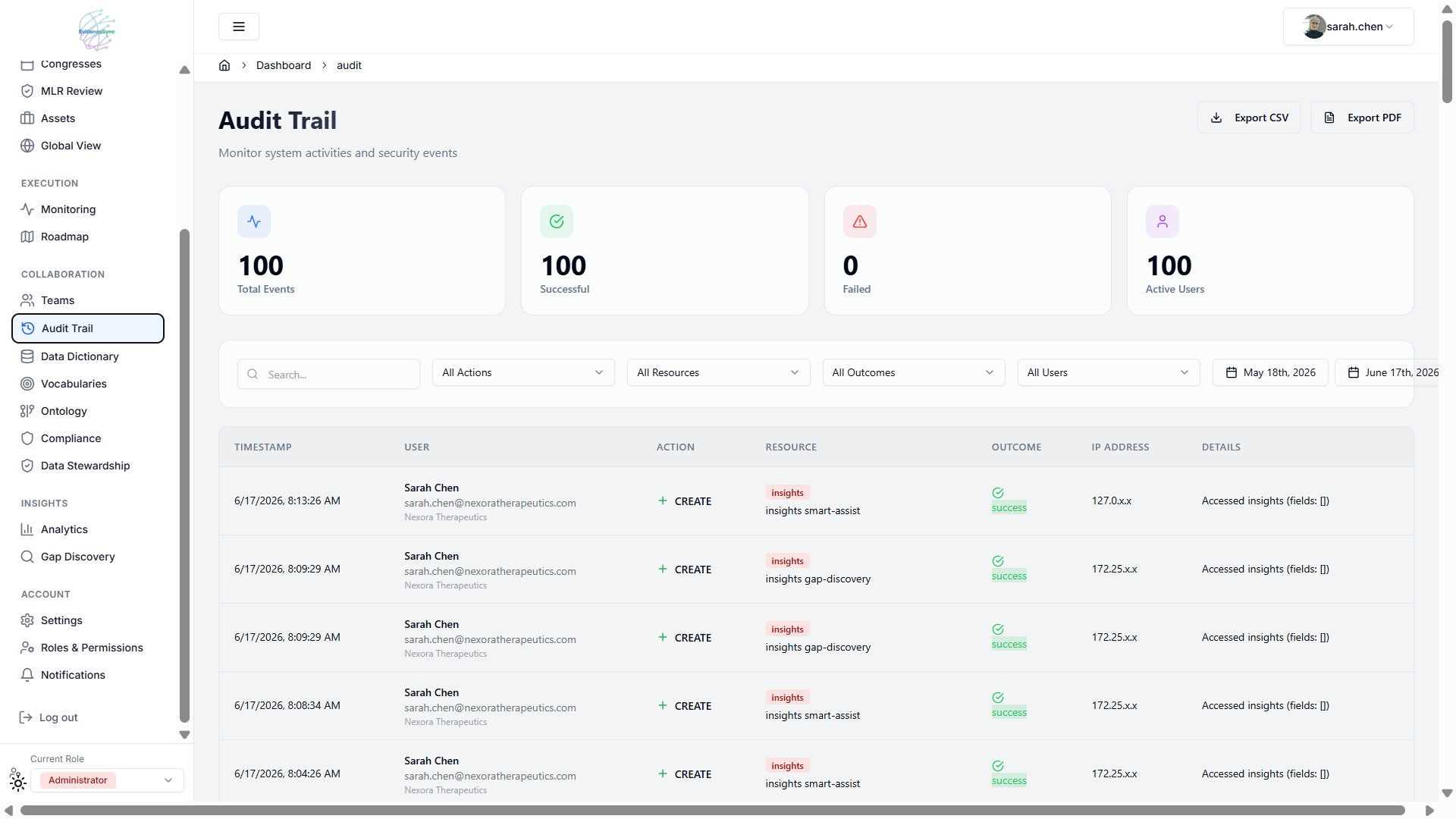
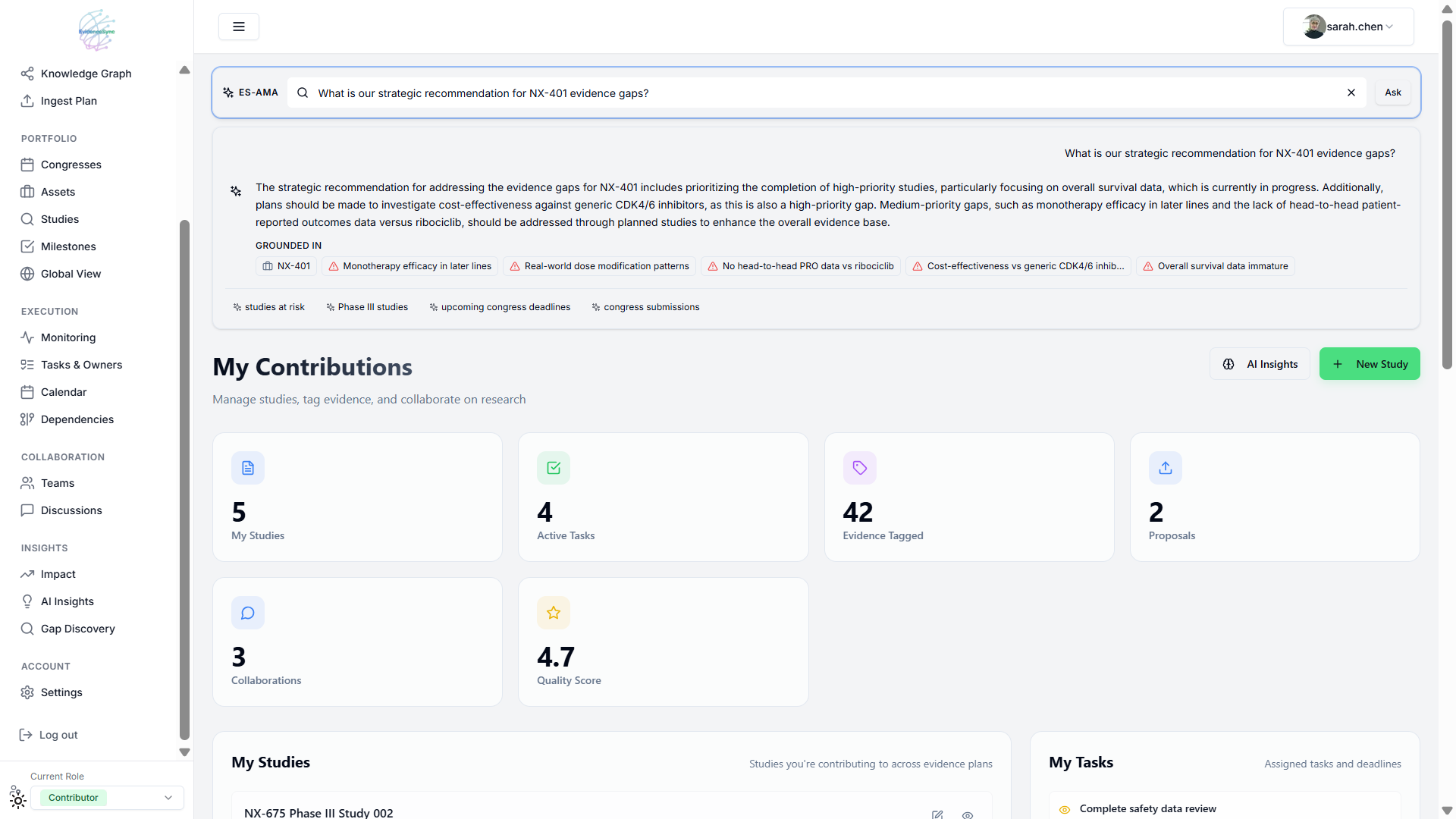
EvidenceSync aggregates evidence inputs, structures them into evidence objects, connects them through a knowledge graph, uncovers evidence gaps, defines source-backed actions, and carries the work through review, execution, and Data Dissemination Planning.
EvidenceSync creates a closed loop for evidence work. It finds what is missing, defines what to do, scores what matters, routes work to the right teams, and preserves the rationale behind every evidence decision. The sections below walk the workflow stage by stage.
EvidenceSync gives evidence teams one place to bring together the inputs that normally stay trapped in decks, trackers, documents, inboxes, and disconnected systems.

Agentic AI turns unstructured evidence material into structured, reviewable, source-backed objects.
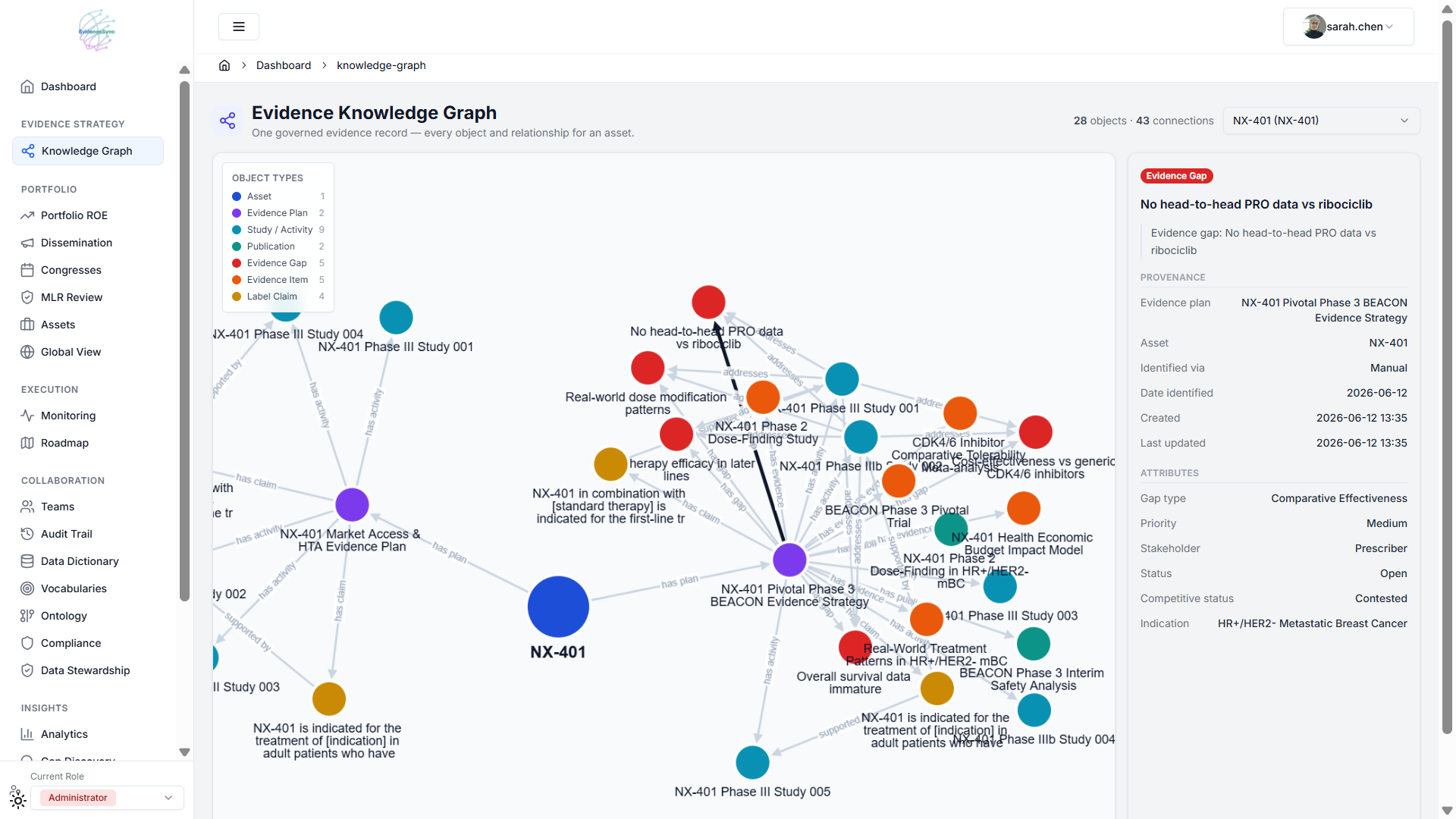
The knowledge graph breaks silos by making relationships explicit. Teams no longer manage disconnected evidence artifacts. They manage one governed evidence record.
Documents, plans, publications, insights, and studies become structured evidence objects connected by source, claim, objective, gap, stakeholder, activity, action, and dissemination pathway.
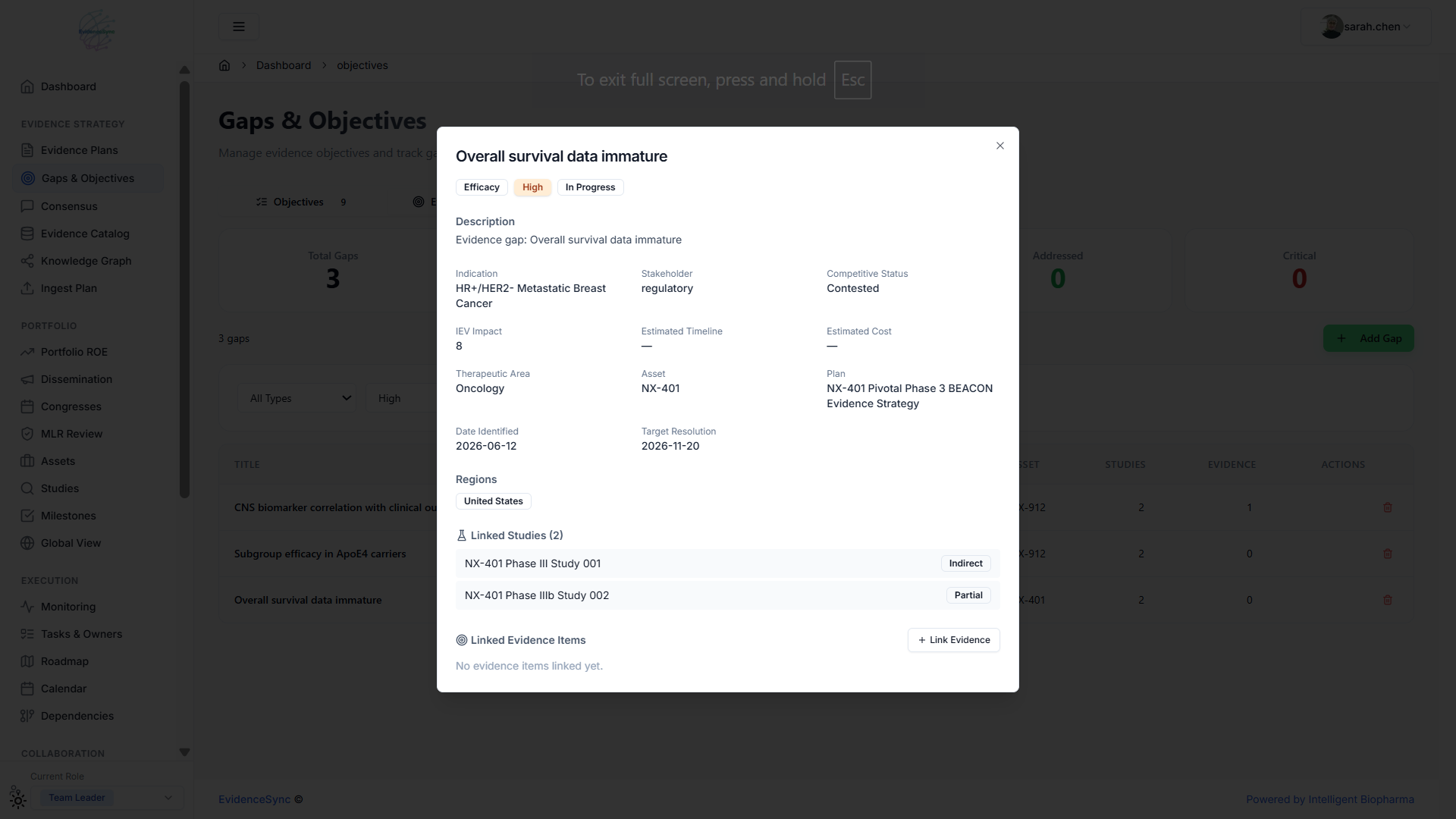
EvidenceSync agents reason over the evidence knowledge graph to detect gaps that would otherwise remain hidden across documents, systems, functions, and planning cycles. Each gap is linked to the source record, the affected objective, the stakeholder need, and the downstream decision it may impact.

EvidenceSync does not stop at gap detection. It converts gaps into structured, reviewable action objects with rationale, ownership, timing, recommended evidence activity, affected stakeholders, dependencies, review pathway, and ROE scoring.

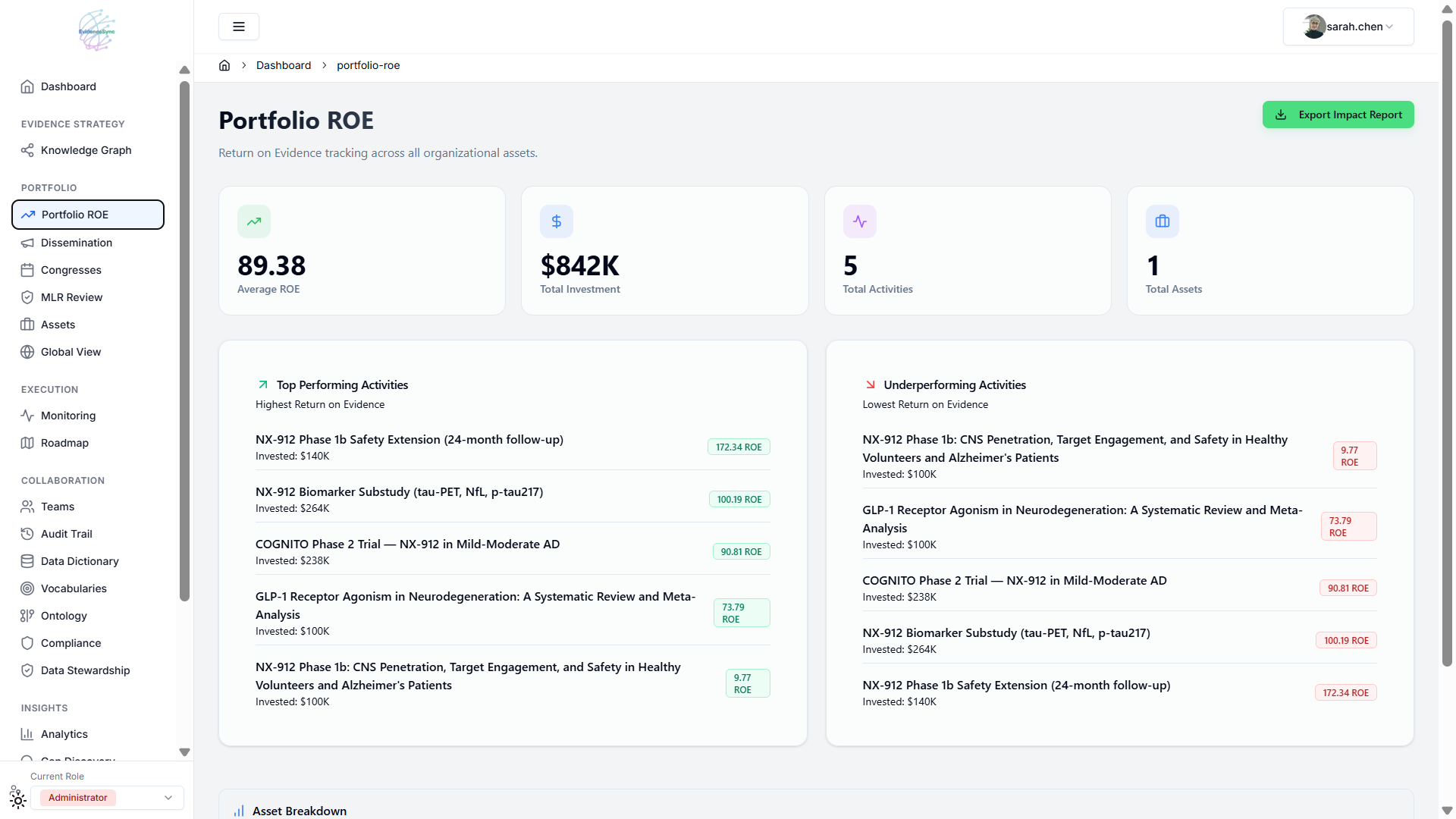
Every defined action carries an ROE score, so prioritization is explicit instead of political. Compare actions by strategic value, cost, feasibility, timing, and evidence impact, at activity, asset, and portfolio level.
The Return on Evidence framework →
Every function sees the same evidence record through the lens of its role, responsibilities, and decision rights.

Accepted actions become evidence activities with owners, milestones, and dependencies tracked against the plan, all on the same governed record.
EvidenceSync connects evidence generation to Data Dissemination Planning, helping teams align publications, congress activity, stakeholder communications, internal summaries, and review-ready outputs with the underlying evidence strategy.
Every recommendation, score, review, and decision remains traceable to source. When the strategy is questioned, internally, by governance, or by an auditor, the rationale is already on the record.

EvidenceSync does not use AI as a generic chatbot layer. Its agents operate over a governed evidence knowledge graph, where evidence objects, claims, gaps, actions, activities, stakeholders, plans, and dissemination outputs are connected and traceable.

EvidenceSync is designed to integrate with the systems where evidence work already happens, including document repositories, clinical data environments, publication planning systems, medical information tools, CRM or insight platforms, and internal knowledge bases. Phase 1 supports structured ingestion and controlled document-based workflows. Enterprise integrations can be configured based on customer environment and deployment requirements.
EvidenceSync is built on a governed evidence knowledge graph with agentic AI workflows layered on top. Agents retrieve from approved evidence sources, reason across connected evidence objects, generate source-backed recommendations, and route outputs through role-based review. The architecture is designed for traceability, governance, and regulated evidence workflows.
A tailored walkthrough, stage by stage, on a record that looks like yours.